
Herman in Hamburg Against the Backdrop of 100 Years of History
- News
- Articles
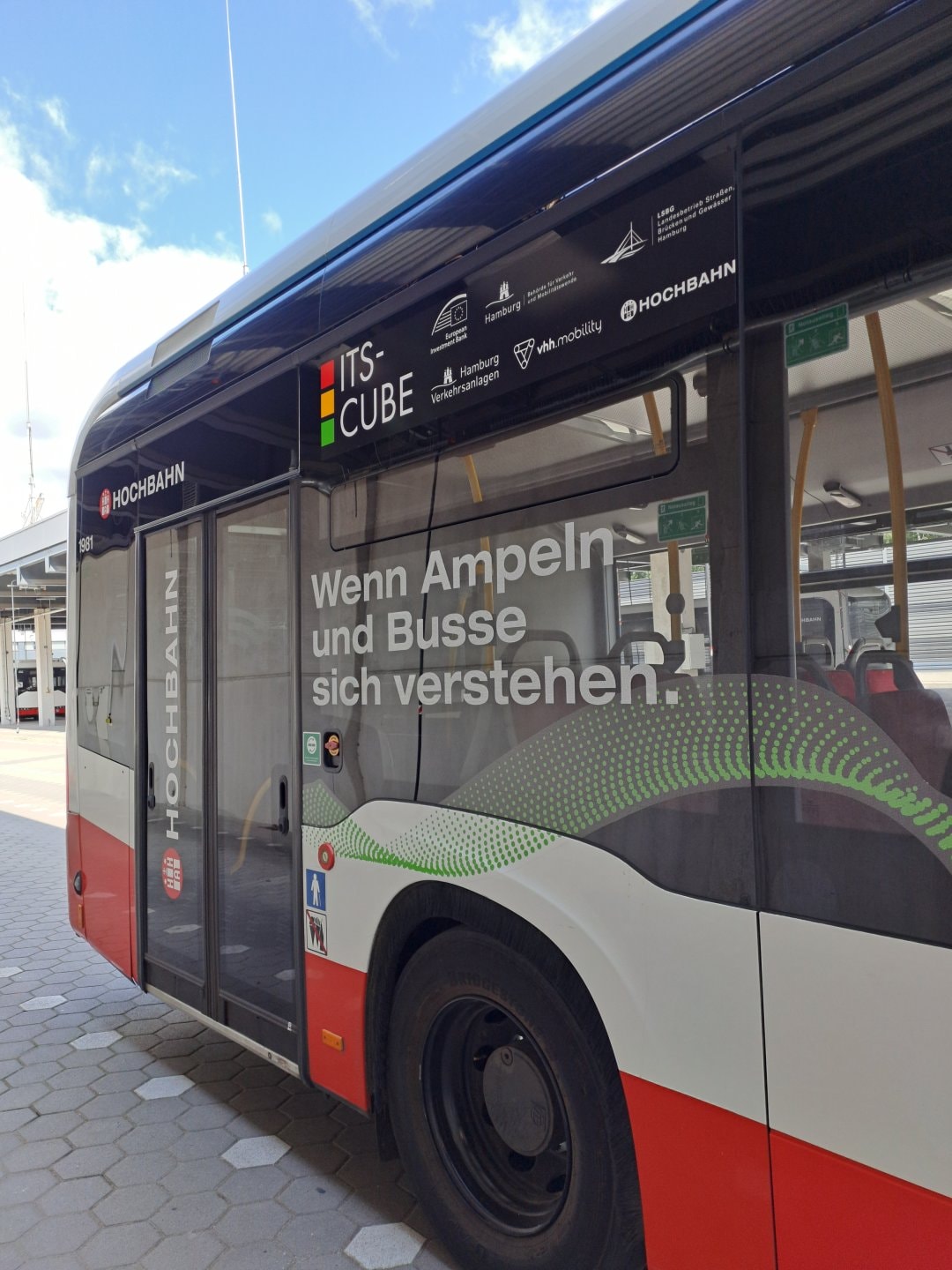 Hamburg is testing an innovative system that connects city buses with traffic lights via onboard units (OBUs – On-Board Units) supplied by the company Herman. The technology is based on the V2X (Vehicle-to-Everything) communication principle, enabling traffic lights to respond to an approaching bus and optimize the signal plan. This project is part of the city’s broader digital mobility strategy.
How does the technology work?
Buses equipped with OBU units transmit a priority request based on data from the onboard computer. The OBU unit obtains this data using the newly developed PTX protocol, as we wrote about here. Traffic lights receive the data and dynamically adjust the signal cycle so that buses are given priority whenever possible. The result is reduced waiting times at intersections, better adherence to timetables, and lower fuel consumption thanks to smoother driving. The Herman OBU unit was therefore part of the system presentation to journalists and local government representatives on Friday, December 12.
“Intelligent traffic lights are of crucial importance for traffic management in Hamburg. They support public transport, reduce congestion and emissions, and make traffic safer and smoother,” says Dr. Anjes Tjarks, Senator for Transport and Mobility (Source: Hamburg.de) .
The project contributes to reducing CO₂ emissions, as buses do not have to stop and start unnecessarily. In this way, Hamburg is promoting sustainable transport and fulfilling the goals of its climate strategy.
History of traffic lights in Hamburg
The testing is taking place symbolically at a time when Hamburg is celebrating 100 years since the installation of its first traffic light at the Mönckebergstraße intersection. From manual control, the city has progressed to fully automated systems and now to intelligent transport infrastructure.
Future of the project
Testing of Herman’s OBU units in Hamburg confirms that the company’s innovative technology can significantly improve traffic management in large cities. If the project proves successful, it could become a model for other metropolitan areas seeking efficient and sustainable transport solutions.
Video from the website: