Invitation to InnoTrans 2026
We would like to invite you to visit our stand at the InnoTrans 2026 international transport technology trade fair, taking place at the Messe Berlin exhibition centre in Germany from 22 to 25 September 2026. You will find us in Hall 2.1, Stand 145.
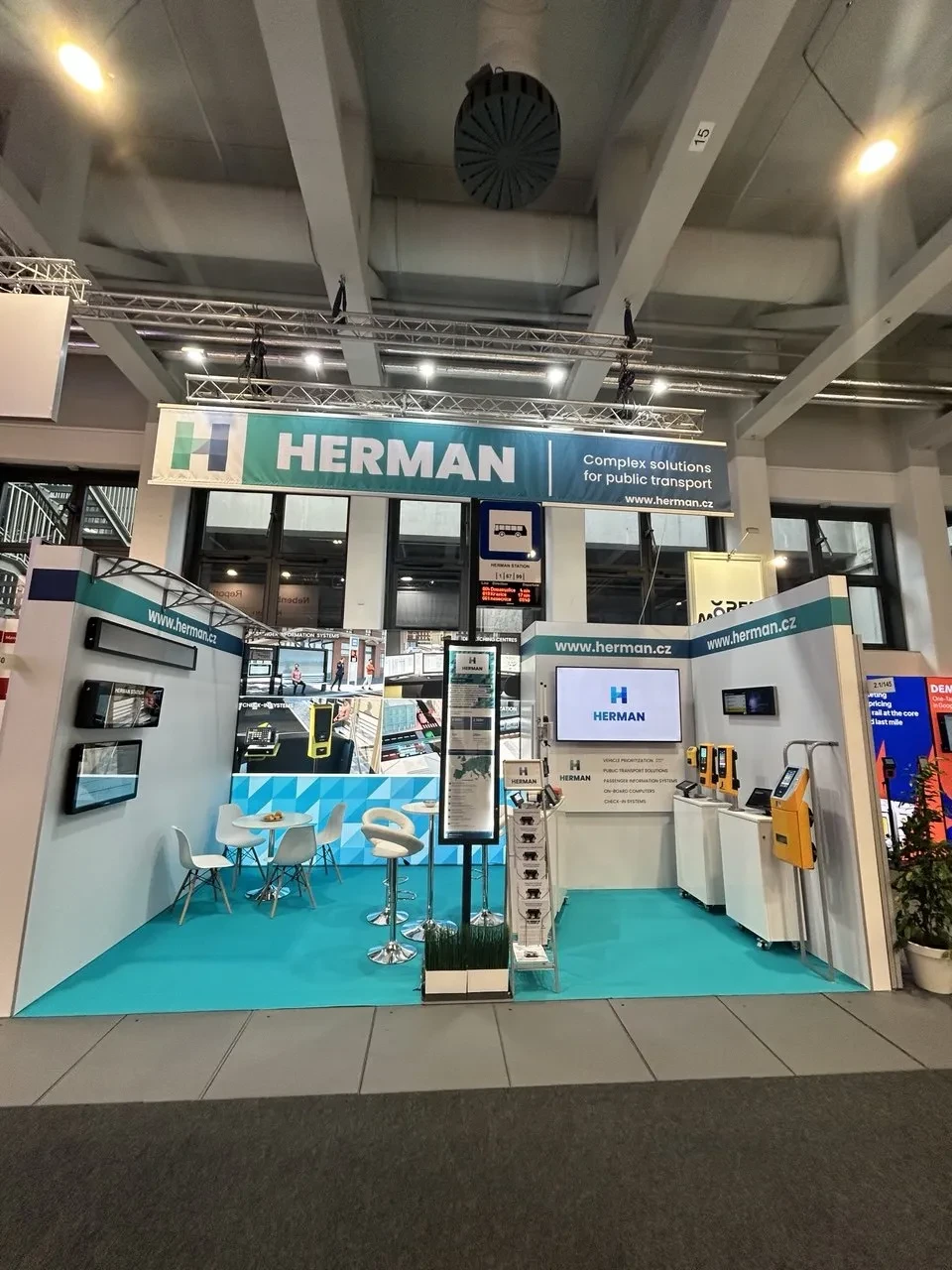 What can you look forward to?
- Intelligent Transport Systems (ITS) for traffic management and optimisation
- C-ITS and V2X technologies for communication between vehicles and infrastructure
- On-board systems and electronics for public transport vehicles and specialised applications
- Stop and information systems
- Dispatch and software tools for efficient transport management
- Face-to-face meetings with HERMAN experts and opportunities for specialist consultations
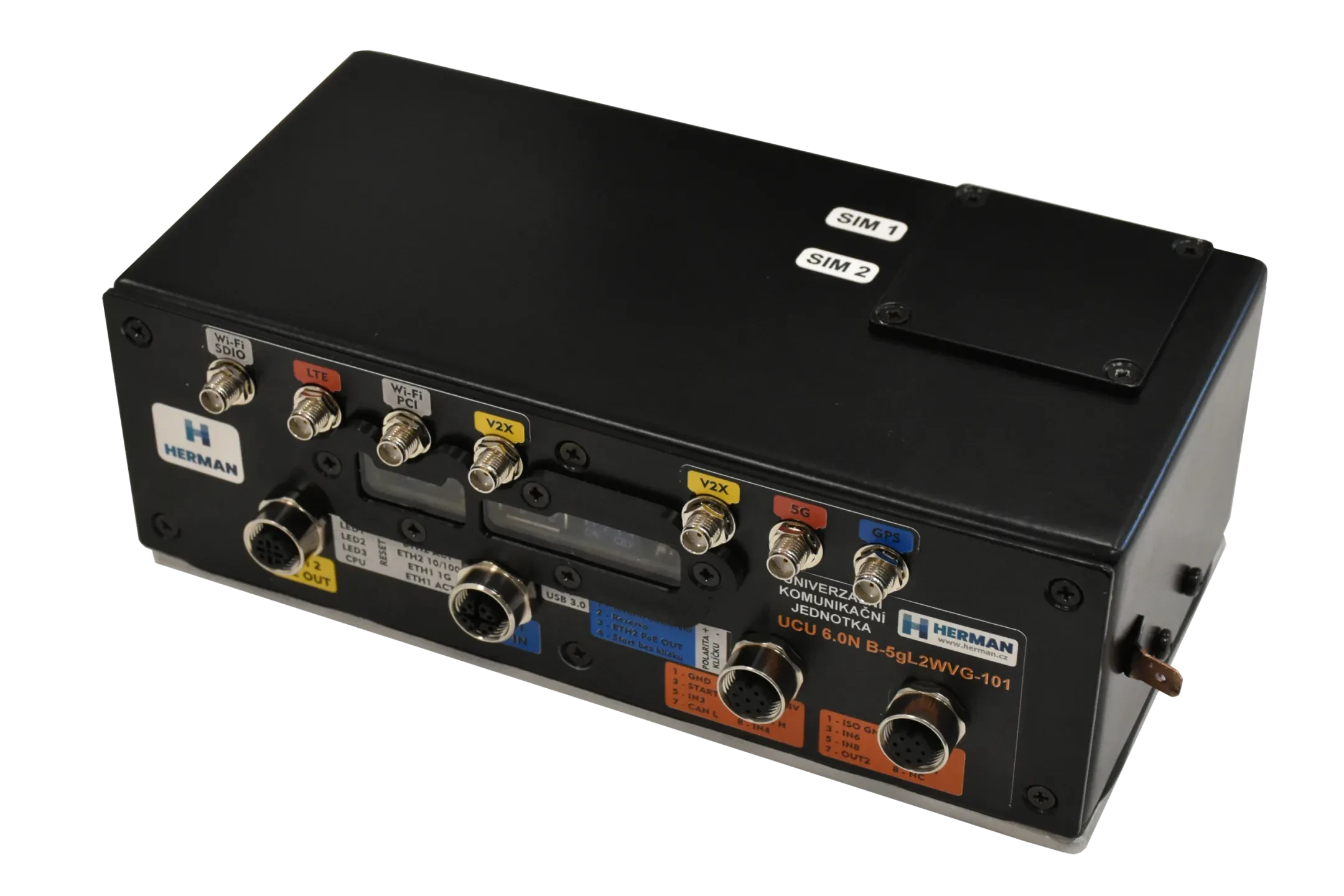
Premiere: UCU 6.0N on-board unit (OBU) with IP 54
One of the highlights of our stand is the new-generation UCU 6.0N on-board unit (OBU) with IP 54. It supports both V2X (ITS-G5) and C-V2X, offers up to two 4G/5G modems, IP54 protection and robust M12 connectors, and meets C-ROADS 3.2 standards. Stop by and see it live.
We look forward to meeting you.
The HERMAN team
České dráhy is rolling out a new CCTV system from Herman
Every day, CityElefant commuter trains carry thousands of passengers. Alongside comfort and reliability, increasing emphasis is therefore being…
MetroBus Porto – a project based on V2X technology
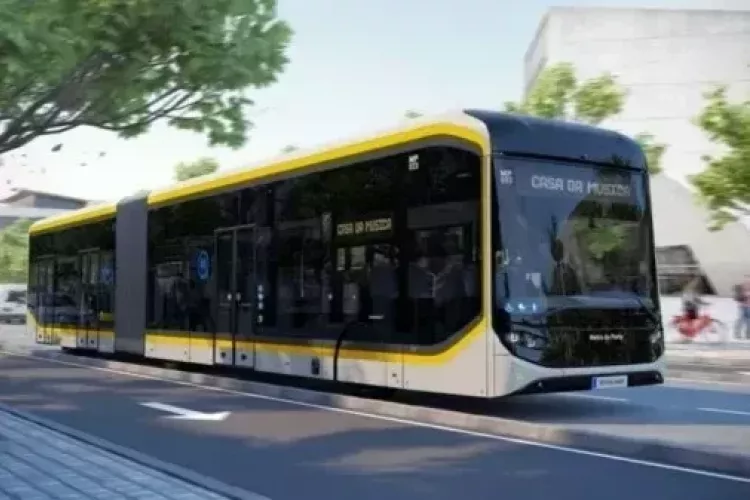
At the end of February, the Portuguese city of Porto launched a new Bus Rapid Transit (BRT) system based on hydrogen-powered articulated buses, known…
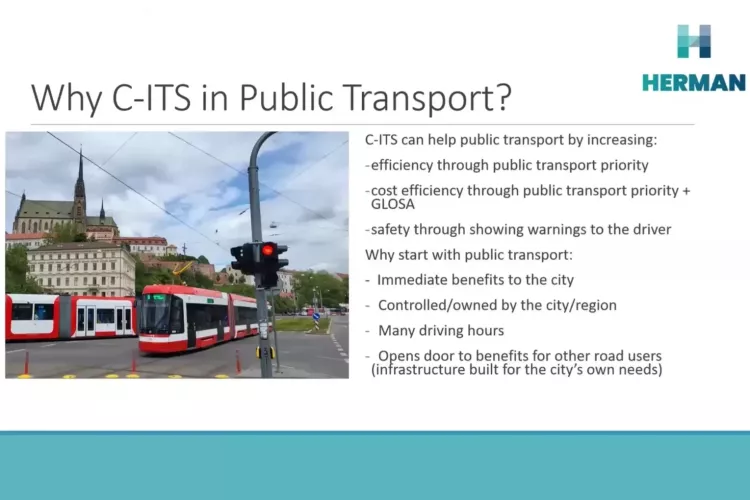
Webinar recording: How to improve public transport using C-ITS
On 12 May 2026, an international webinar entitled ‘How to improve public transport with C-ITS’ was held as part of the C-Roads platform. The webinar…
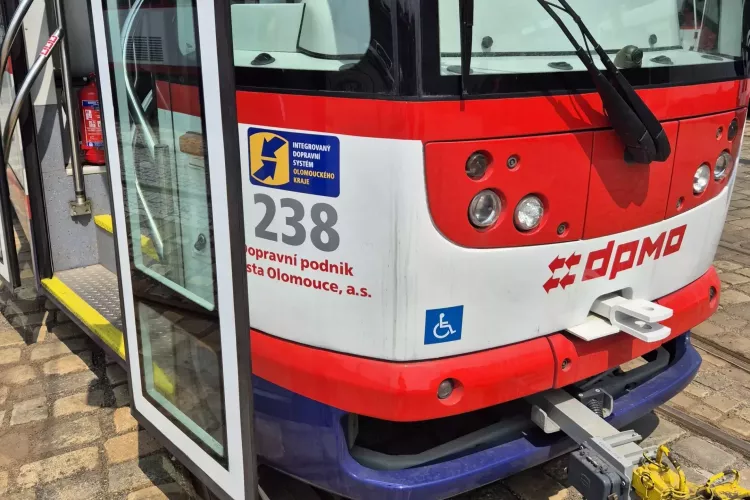
Transportella manages communications for Olomouc’s public transport system
As part of an extensive modernisation of its radio infrastructure, the Olomouc Transport Company (DPMO) has switched to the TETRA communications…

Smart public transport stop signs in Tábor
In early 2026, Herman completed a project involving smart public transport information panels in Tábor, aimed at improving the availability and…
České dráhy is rolling out a new CCTV system from Herman
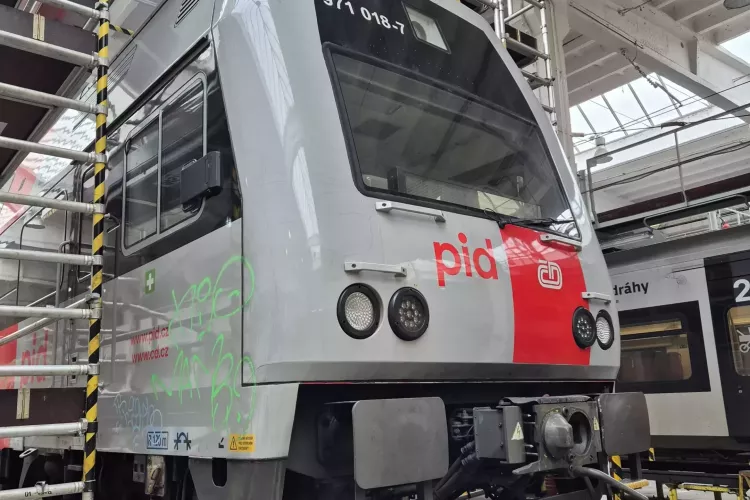
Every day, CityElefant commuter trains carry thousands of passengers. Alongside comfort and reliability, increasing emphasis is therefore being placed on safety and protecting the trains from vandalism.
České dráhy has therefore launched an extensive modernisation of the CCTV systems in its 471 CityElefant series trains. The project aims to help protect passengers, speed up the resolution of incidents and contribute to reducing damage caused by vandalism. Herman is also involved in the supply of the technology.
Modern surveillance for modern transport
Once completed, all 55 CityElefant trainsets will be equipped with the new CCTV system. Each train will provide a comprehensive overview of what is happening both inside and around the train thanks to a network of 42 cameras positioned inside and outside the carriages. The modernisation, worth nearly 88 million crowns, is due to be completed by autumn 2027.
The camera footage will assist in investigating incidents, protecting passengers and cooperating with the security services. Another key benefit is the ability to review incidents retrospectively and provide more effective protection of the operator’s assets.
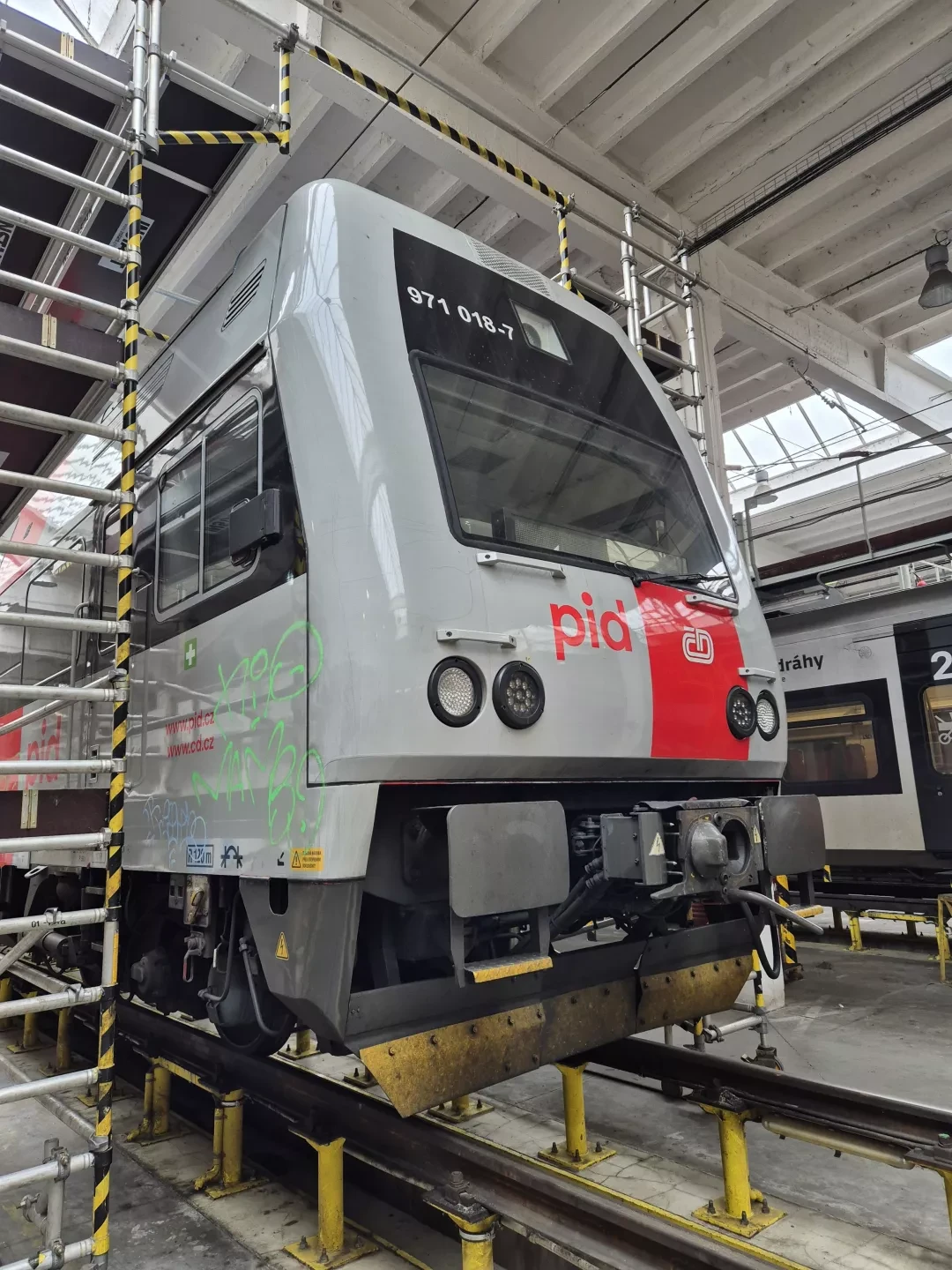
Vandalism causes millions in damage to transport operators every year
Cameras that monitor parked trains too
A key part of the system is the protection of trains even when they are not in regular service. External cameras remain active even whilst a train is parked, and the system can detect attempts to damage or cover them. This enables a significantly faster response to suspicious incidents.
It is precisely this combination of monitoring, diagnostics and remote surveillance that represents an important step in the long-term fight against vandalism on the railways. The installation of the cameras forms part of the ‘Together for Clean Trains’ programme, which České dráhy is implementing in collaboration with the Central Bohemian Region and the City of Prague.
Herman technology in a demanding railway environment
Railway operations require exceptionally reliable solutions. CCTV systems must operate over the long term in demanding conditions, withstanding vibrations, continuous operation and high demands on the storage and management of recordings.
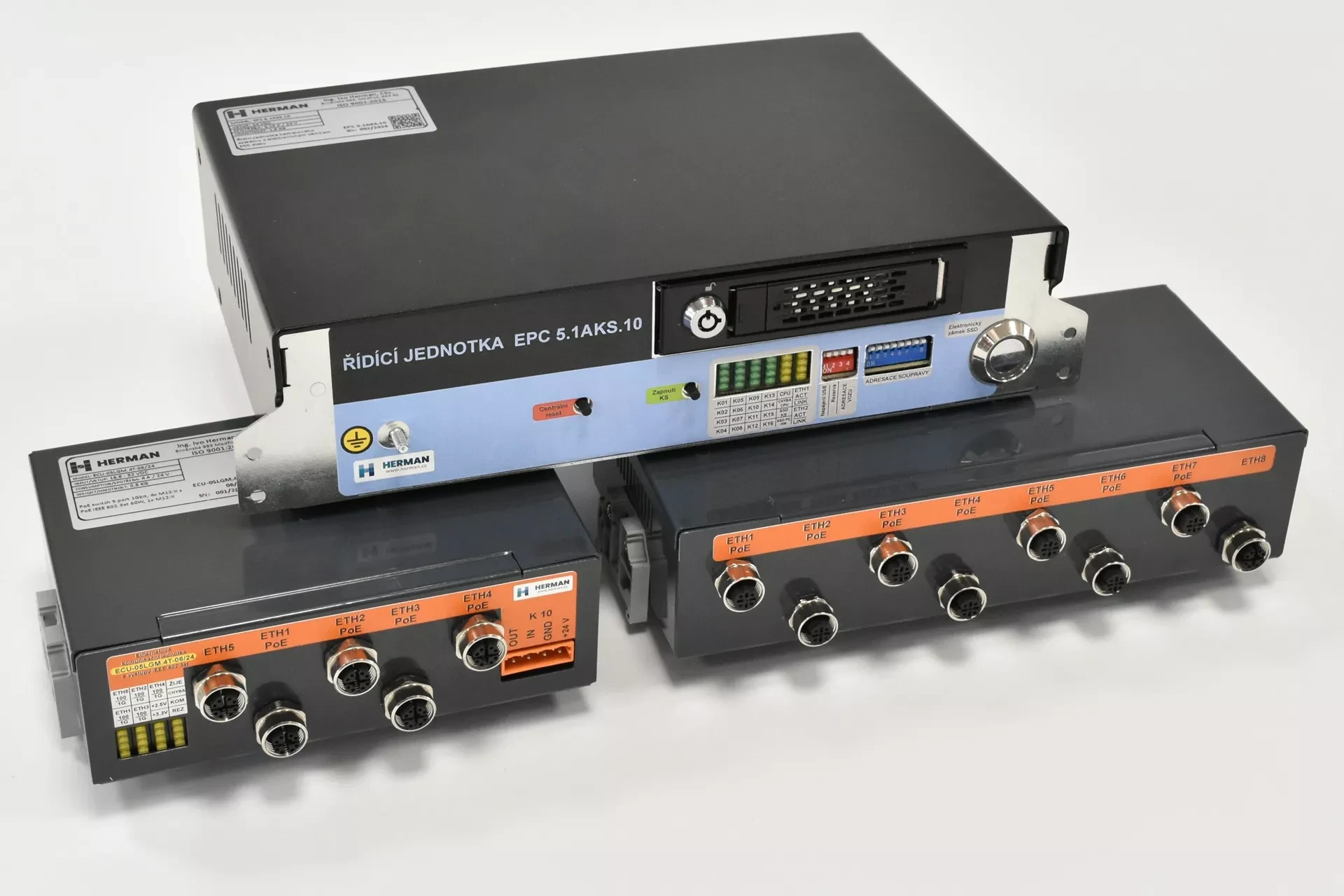
The EPIS 5.1AKS CCTV system, developed in Modřice near Brno, forms part of the modernisation of the CityElefant trainsets
The technologies developed by Herman are designed specifically for transport applications such as these, where stability, a long service life and reliable operation are crucial. Their deployment on CityElefant trains is yet another example of the use of modern security technologies in everyday public transport.
The modernisation of the CCTV systems on CityElefant trains has also attracted attention outside the railway sector. Video: 42 new cameras per train – Seznam Zprávy
Smart public transport stop signs in Tábor
In early 2026, Herman completed a project involving smart public transport information panels in Tábor, aimed at improving the availability and…

Traffic management in Zlín: the city launches ITS development with C2X elements
The statutory city of Zlín is implementing an ambitious project to modernise its intelligent transport system (ITS), which is aimed at increasing…
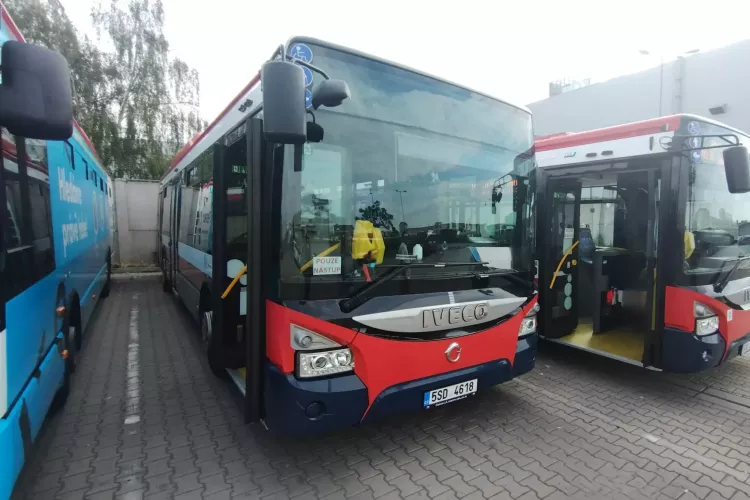
Public transport telematics in Mladá Boleslav: Herman has supplied a modern C-ITS solution for smart transport
The town of Mladá Boleslav has made progress in the digitalisation of public transport and strengthened its position among smart cities in the Czech…
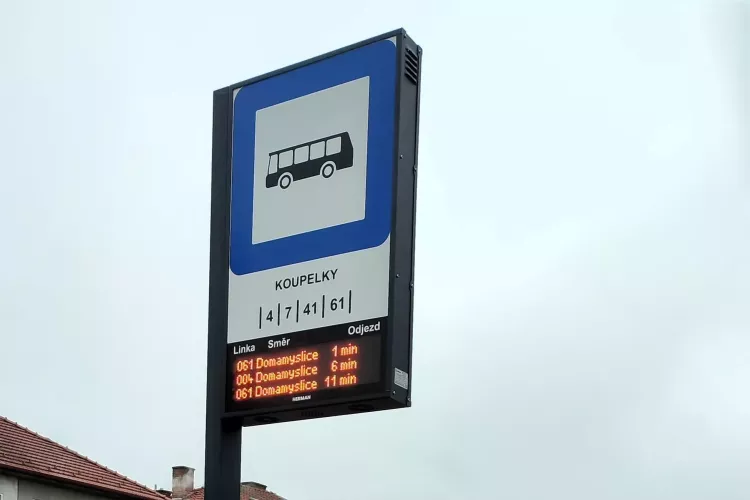
Smart bus stops are transforming Prostějov
HERMAN technologies solution moves public transport forward Prostějov has completed a project to digitise its public transport stops. Herman…

Modernisation of emergency services vehicles in the Ústí nad Labem Region: C-ITS and V2X technology
Modernisation of emergency services vehicles in the Ústí Region: C-ITS and V2X technology The year 2025 marked a major technological leap for the…
Innovated EPIS 5.1AKS Camera System
Herman introduces a significantly innovated version of its EPIS 5.1AKS-10 camera system, building on the previous EPIS 5.0AKS model. The new generation delivers substantially higher performance, extended configuration options, and enhanced security for handling camera recordings—particularly for public transport vehicles and emergency services.
Significantly more powerful control module
The new EPIS 5.1AKS system is equipped with a far more powerful control module, enabling simultaneous recording from up to 16 cameras. The internal SSD can be selected with a capacity of up to 8 TB, greatly expanding storage space for recordings.
The unit also includes a backup battery that, in the event of a power outage, ensures safe retention of camera data stored in the control unit’s memory.
Enhanced security with an electronic lock
Another innovation is the option to equip the system with an electronic lock based on Dallas chips, used to identify the person performing manual removal of the SSD. This operation is automatically logged in the internal memory of the control unit.
Wide connectivity and configuration options
The control unit can be equipped with the following accessories:
- LCD display unit for monitoring camera views inside the vehicle
- LTE or 5G
- Wi-Fi module (including Wi-Fi 6 standard)
- GNSS – positioning accuracy down to 1.5 m
- Control keypad for camera selection (standalone system)
- Interface for external control of the camera system (onboard computer, control and monitoring center)
Communication is handled by two 1 Gbit/s Ethernet ports, providing both camera system control and connectivity to the vehicle’s internal network. A dedicated RS-485 bus is available for the external control keypad. The status of individual cameras and the control unit itself is indicated by LEDs (16× LEDs – one per camera).
Power-state response and auxiliary control functions
The system includes additional inputs and outputs for controlling connected devices—for example, relays switching heating for external cameras, PoE switch power status (supplying power to the cameras), etc. If the EPC control unit receives information that the vehicle does not have sufficient energy to operate the system, it automatically shuts down the cameras and then itself.
New PoE Ethernet switches
To support camera systems with a higher number of cameras (up to 16), two new switch types with increased PoE performance have been developed. They are suitable for vehicles and other environments using +24 V or +12 V power. The new types are:
- ECU_05LGM-4T-06/24 – 5-port Gigabit switch, 60 W PoE (802.3at), M12 connectors – X-coding
- ECU_08LM-7Tx-12-24 – 8-port switch, 100 Mbit/s, 120 W PoE (2× 60 W), connectors: 7× M12-D and 1× M12-X
Monitoring management
The EPIS 5.1AKS system supports remote monitoring and control, including retrieval of recordings in both online and offline modes, in accordance with the functions described in the KS-BOS system.
“We are currently building up inventory for EPIS 5.1AKS. We focused on reliability and fleet management: recording from up to 16 cameras, audited SSD removal via a Dallas chip, and optional LTE/5G and Wi-Fi 6 connectivity simplify both operation and servicing,” says Ivo Herman.
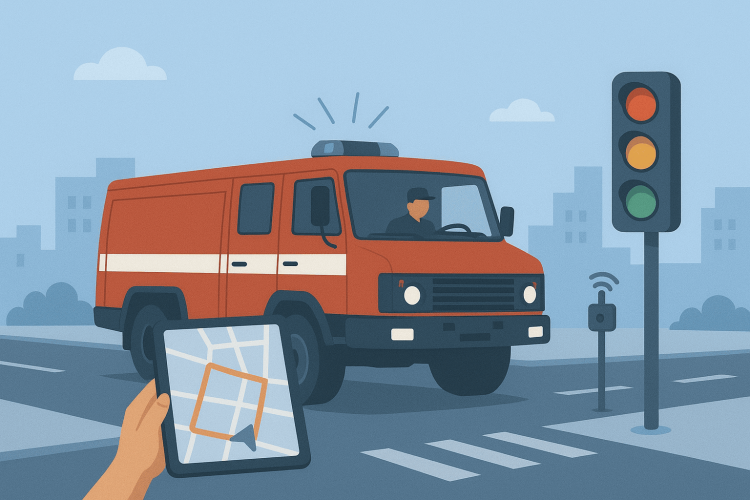
Traffic Management and Emergency Response
How GINA Software and Herman Improve Urban Mobility Traffic management plays a crucial role in how quickly and safely emergency vehicles reach the…

We have been certified ISO 27001
We are pleased to inform our customers and partners that we have obtained ISO 27001 certification, confirming that our information security…
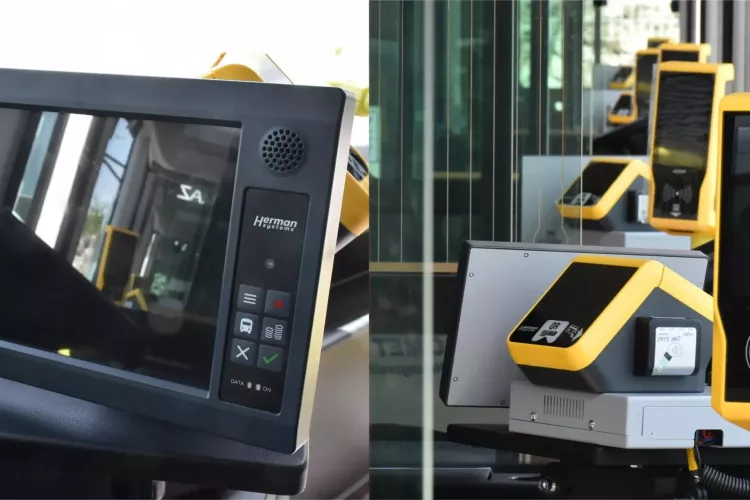
Holidays in Split with check-in at our office
If you’re heading to Split in Croatia on holiday and using the local public transport operated by Promet Split d.o.o., you’ll come across our…
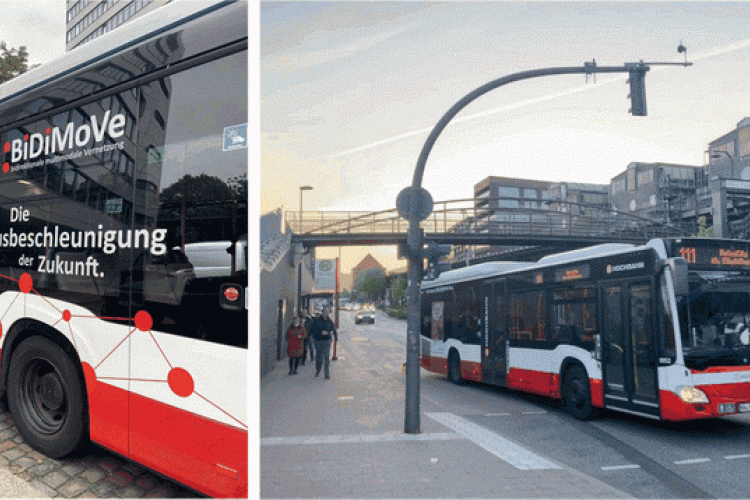
Hamburg – continuation of the BiDiMoVe project
In August 2021, we successfully took part in the BiDiMoVe project plug test (Bidirektionale Multimodale Vernetzung – a project funded by the German…
The new EPIS 4.1 on-board computer
We have developed an updated version of the EPIS 4.0 on-board computer, called EPIS 4.1A, for new public transport projects. The key feature of the on-board computer is a 20% increase in computing power and a significant acceleration in peripheral control, which boosts its performance by up to 10 times compared to the previous EPIS 4.0Cx model. Further improvements to its features are, of course, also included.
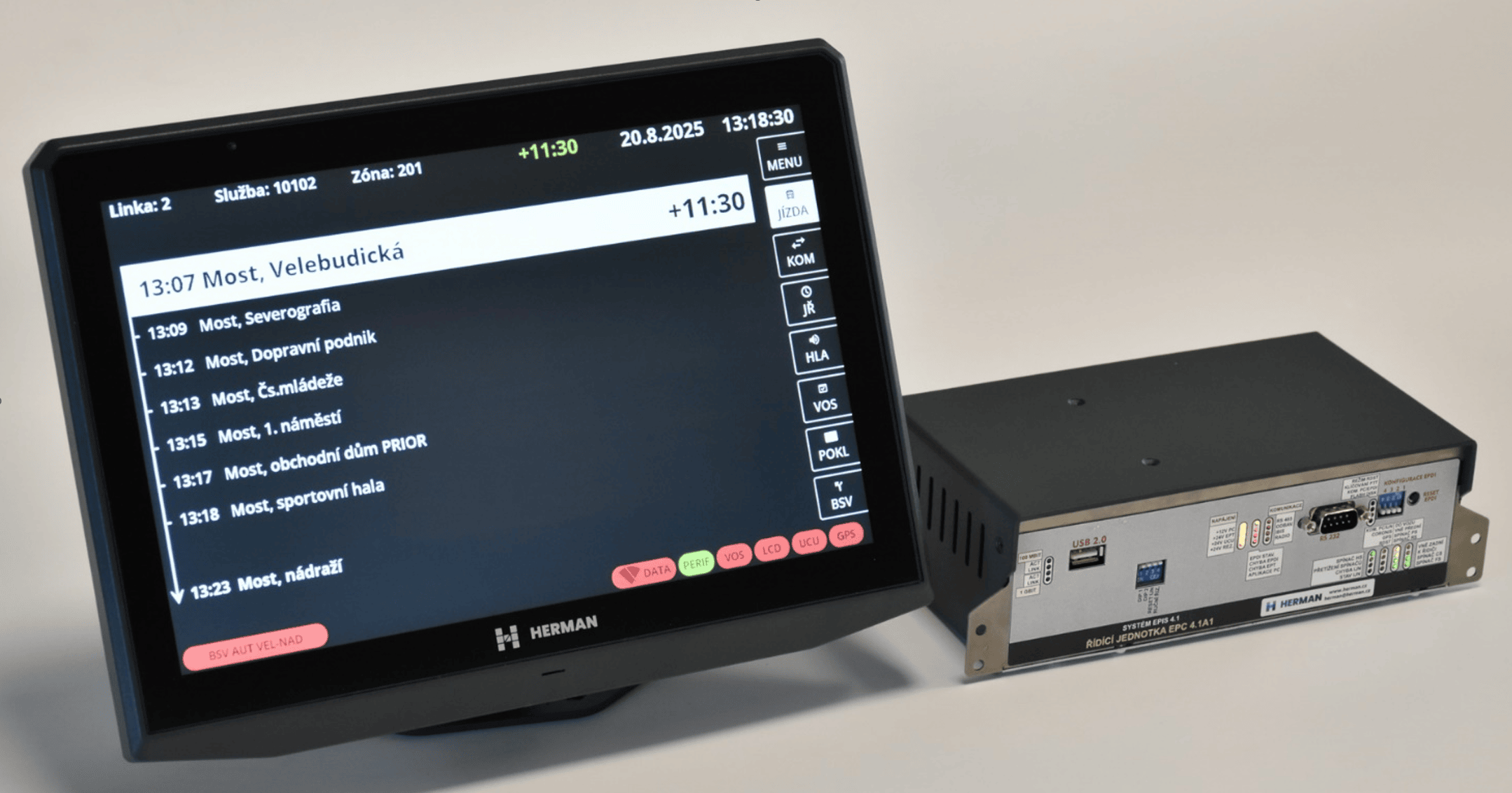
Assembly of the new EPIS 4.1A on-board computer for DP Most
The upgraded on-board computer consists of two main components:
- The EPC 4.1Ax control unit, depending on the required model, and
- The EPT 4.x on-board computer terminal, available with display sizes ranging from 7” to 12” (the larger size is suitable for extensive passenger processing with multiple fare options),
Advantages or changes in the new on-board computer:
- A more powerful PC module,
- Use of the proven IJN integrated power supply unit, i.e. output power control, vehicle excitation (timed or on demand via low-power radio communication), single-bit inputs/outputs and more.
- Ability to communicate via voice using data on GSM networks – communication control with a SIP switchboard at the control centre.
- Suitable for digital radio networks, GSM networks and 5G – 1 Gbit/s Ethernet connection
- Innovative radio unit converter (integrated into the on-board computer, thus saving space in the electronics cabinet)
- Innovated output to the EPT terminal – see terminal description
- Option to use excitation frequency via LoRaWAN modules
Basic features of the control unit
Basic features of the industrial PC (full-featured solution):
- Type based on PC architecture with 64-bit architecture
- Quad-core processor – 1.5 GHz with max. power consumption of 9W
- 8 GB RAM – LPDDR4 type
- 1 GB Ethernet, including PoE for the Universal Communication Unit (UCU)
- 1x Ethernet with a vehicle bus speed of 100 Mbit/s.
- Intel graphics (Gen 11) with HDMI/DP and LVDS/eDP interfaces – as selected
- External SSD drive with a minimum capacity of 64 GB and an extended lifespan of at least 61 TBW
- 2x USB 3.1 and USB 2.0
- Linux OS
- Boot time – 45 seconds
Additional features of the on-board control unit:
- At least 1x RS485, 1x RS 232, 1x CAN
- 1x IBIS interface
- 1-bit input – at least 10
- 1-bit output – at least 8
- Vibration 20G / 0–600 Hz
- Extended temperature range from -20 °C to +70 °C (for ambient temperatures of -25 °C and below, it heats up for a few seconds using waste heat)
Component control:
- Interface for C-ITS solutions – our universal communication unit (UCU) with V2X communication
- Interface for ticketing control (validators, coin acceptors and ticket dispensers)
- Interface for TETRA radio network control
- Interface for GSM transmission control – control centre (data and voice), BO ticketing, banking servers, payment gateway, connection search engines, etc.
- Interface for controlling Ethernet switches – ECU 08P0.6PA, or ECU 05L-1G
- Control of SAM module unlocking for vehicle systems
- Control of LCDs, external panels, passenger counting, CCTV systems, etc. …
- Option to communicate using the ITxPT protocol
- Automatic or manual point setting
- Control of command receivers for the visually impaired
- Or other peripherals.
EPT 4.xA1-UB terminal
Available with LCD screens ranging from 7” to 12.1” diagonal, featuring a capacitive touchscreen with a hardness rating of H=7. The new driver LCD terminal offers:
- More touch control via the touchscreen, enabling new functions in the on-board computer;
- A USB 2.0 port for updating the on-board computer, with power supply via USB;
- An integrated single microphone for the driver
- Option to integrate a driver’s speaker (depending on terminal installation)
- Option for a split version, i.e. the reader can be routed out of the terminal separately
- Standard features remain, such as a reader for contactless Mifare/Desfire smart cards, which reads the UID from the card, and a Reset button.
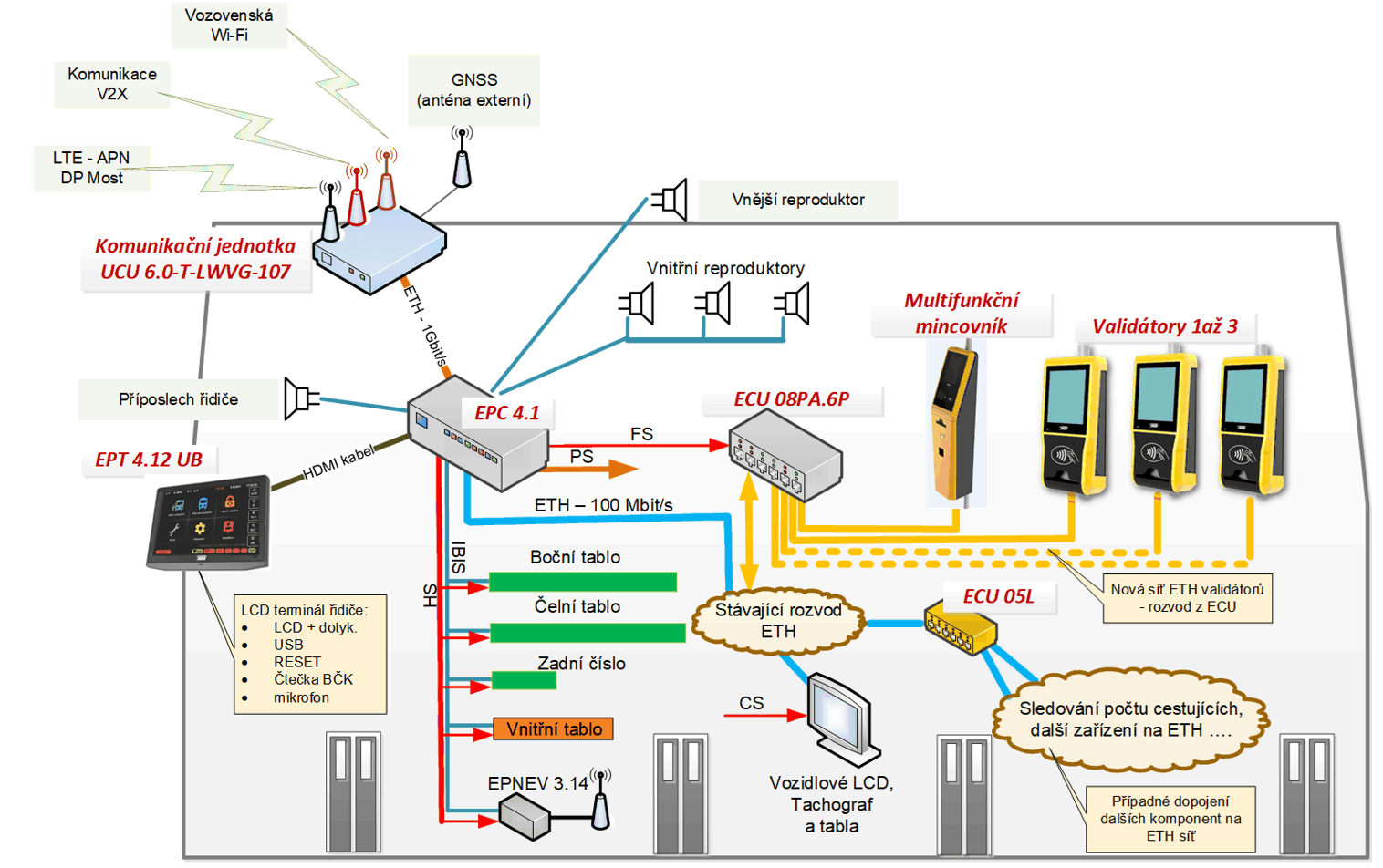
Example of in-vehicle wiring
An example of a possible connection of the new on-board computer in OIS (Check-in and Information System) mode to the vehicle’s EPIS 4.1A on-board computer system is shown in the following figure:
Mechanical design
And what is also very advantageous is that the size of the control unit remains the same (note: it is no longer hardware-compatible with previous models).