The new EPIS 4.1 on-board computer
- Articles and technical information
- Updated
We have developed an updated version of the EPIS 4.0 on-board computer, called EPIS 4.1A, for new public transport projects. The key feature of the on-board computer is a 20% increase in computing power and a significant acceleration in peripheral control, which boosts its performance by up to 10 times compared to the previous EPIS 4.0Cx model. Further improvements to its features are, of course, also included.
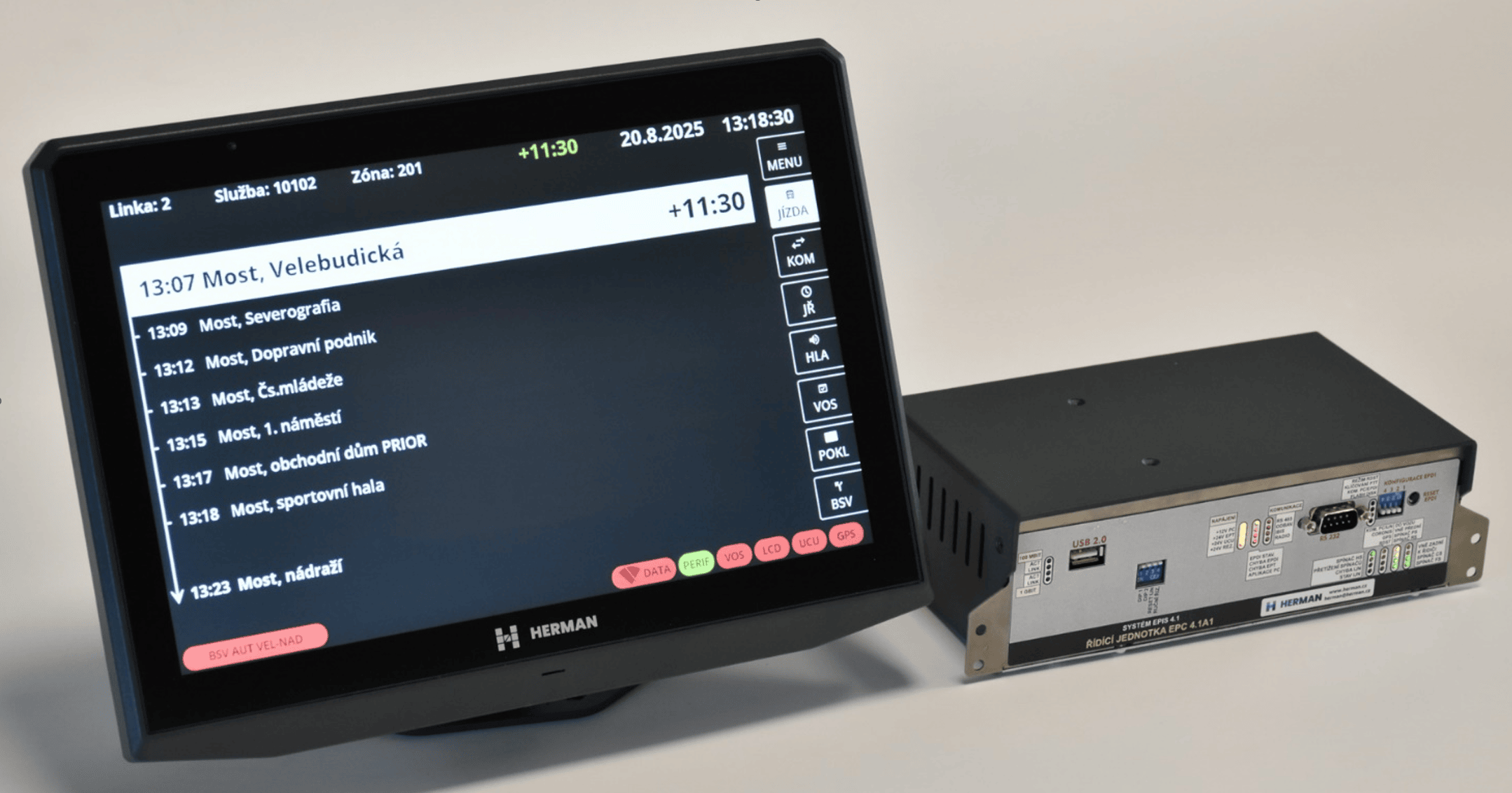
Assembly of the new EPIS 4.1A on-board computer for DP Most
The upgraded on-board computer consists of two main components:
- The EPC 4.1Ax control unit, depending on the required model, and
- The EPT 4.x on-board computer terminal, available with display sizes ranging from 7” to 12” (the larger size is suitable for extensive passenger processing with multiple fare options),
Advantages or changes in the new on-board computer:
- A more powerful PC module,
- Use of the proven IJN integrated power supply unit, i.e. output power control, vehicle excitation (timed or on demand via low-power radio communication), single-bit inputs/outputs and more.
- Ability to communicate via voice using data on GSM networks – communication control with a SIP switchboard at the control centre.
- Suitable for digital radio networks, GSM networks and 5G – 1 Gbit/s Ethernet connection
- Innovative radio unit converter (integrated into the on-board computer, thus saving space in the electronics cabinet)
- Innovated output to the EPT terminal – see terminal description
- Option to use excitation frequency via LoRaWAN modules
Basic features of the control unit
Basic features of the industrial PC (full-featured solution):
- Type based on PC architecture with 64-bit architecture
- Quad-core processor – 1.5 GHz with max. power consumption of 9W
- 8 GB RAM – LPDDR4 type
- 1 GB Ethernet, including PoE for the Universal Communication Unit (UCU)
- 1x Ethernet with a vehicle bus speed of 100 Mbit/s.
- Intel graphics (Gen 11) with HDMI/DP and LVDS/eDP interfaces – as selected
- External SSD drive with a minimum capacity of 64 GB and an extended lifespan of at least 61 TBW
- 2x USB 3.1 and USB 2.0
- Linux OS
- Boot time – 45 seconds
Additional features of the on-board control unit:
- At least 1x RS485, 1x RS 232, 1x CAN
- 1x IBIS interface
- 1-bit input – at least 10
- 1-bit output – at least 8
- Vibration 20G / 0–600 Hz
- Extended temperature range from -20 °C to +70 °C (for ambient temperatures of -25 °C and below, it heats up for a few seconds using waste heat)
Component control:
- Interface for C-ITS solutions – our universal communication unit (UCU) with V2X communication
- Interface for ticketing control (validators, coin acceptors and ticket dispensers)
- Interface for TETRA radio network control
- Interface for GSM transmission control – control centre (data and voice), BO ticketing, banking servers, payment gateway, connection search engines, etc.
- Interface for controlling Ethernet switches – ECU 08P0.6PA, or ECU 05L-1G
- Control of SAM module unlocking for vehicle systems
- Control of LCDs, external panels, passenger counting, CCTV systems, etc. …
- Option to communicate using the ITxPT protocol
- Automatic or manual point setting
- Control of command receivers for the visually impaired
- Or other peripherals.
EPT 4.xA1-UB terminal
Available with LCD screens ranging from 7” to 12.1” diagonal, featuring a capacitive touchscreen with a hardness rating of H=7. The new driver LCD terminal offers:
- More touch control via the touchscreen, enabling new functions in the on-board computer;
- A USB 2.0 port for updating the on-board computer, with power supply via USB;
- An integrated single microphone for the driver
- Option to integrate a driver’s speaker (depending on terminal installation)
- Option for a split version, i.e. the reader can be routed out of the terminal separately
- Standard features remain, such as a reader for contactless Mifare/Desfire smart cards, which reads the UID from the card, and a Reset button.
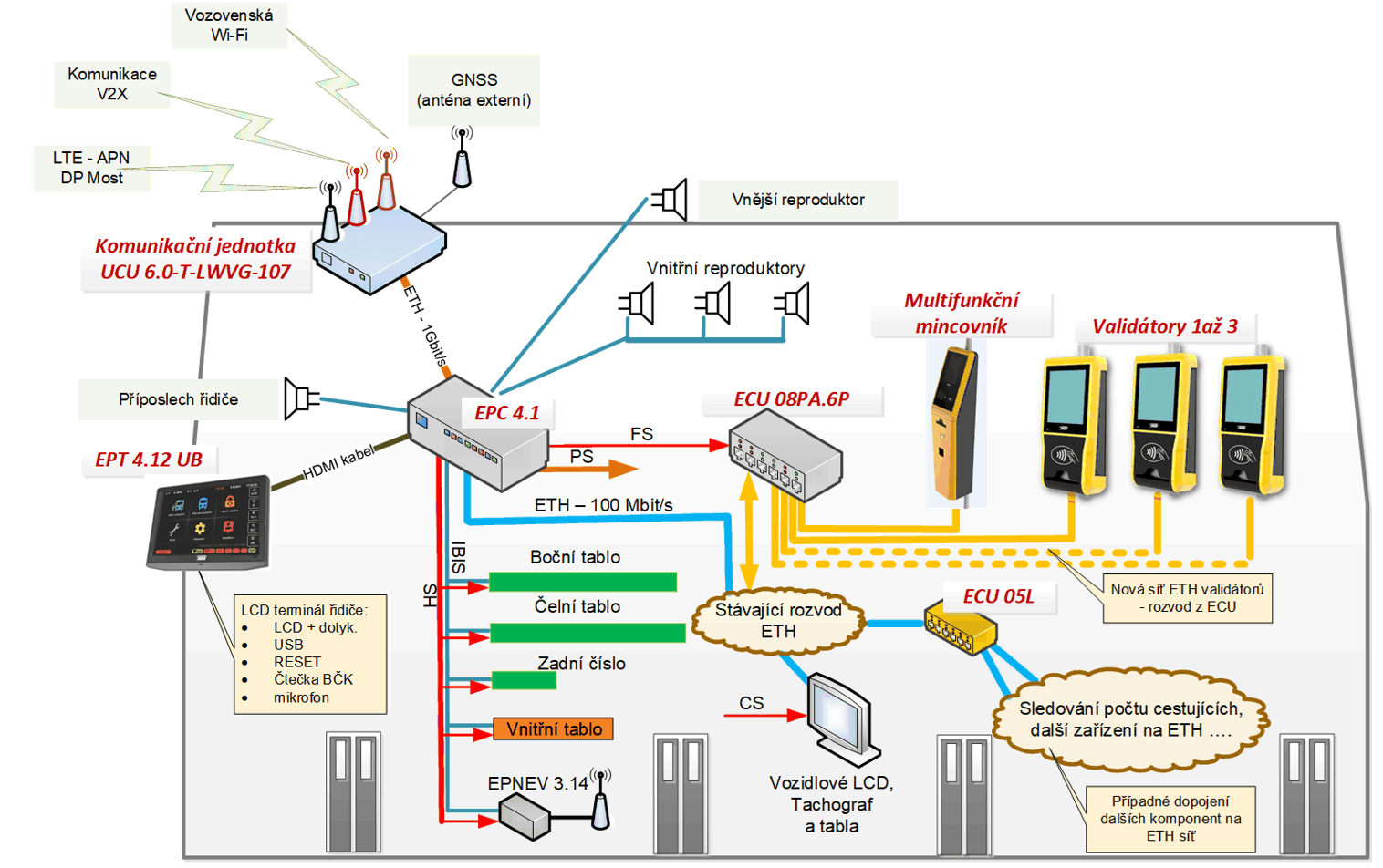
Example of in-vehicle wiring
An example of a possible connection of the new on-board computer in OIS (Check-in and Information System) mode to the vehicle’s EPIS 4.1A on-board computer system is shown in the following figure:
Mechanical design
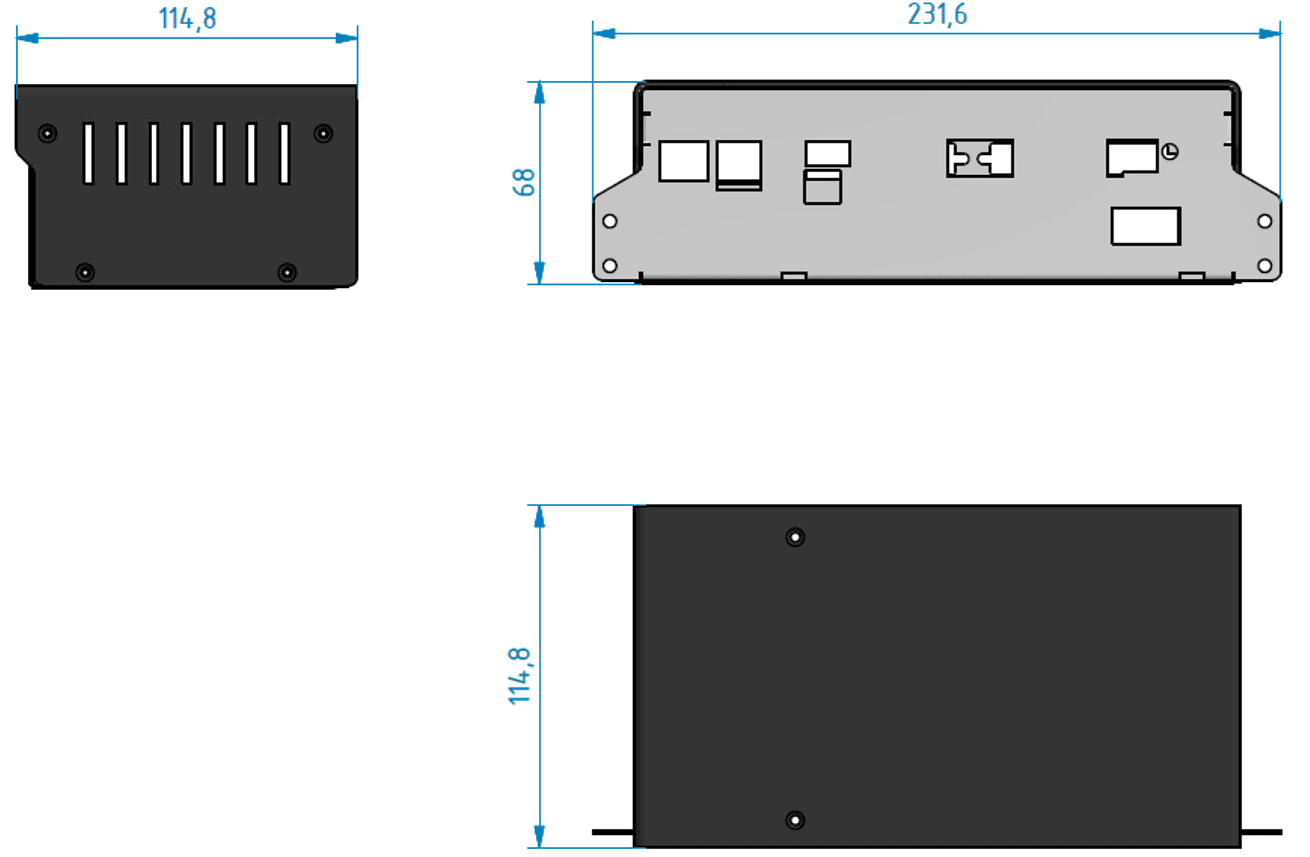
And what is also very advantageous is that the size of the control unit remains the same (note: it is no longer hardware-compatible with previous models).