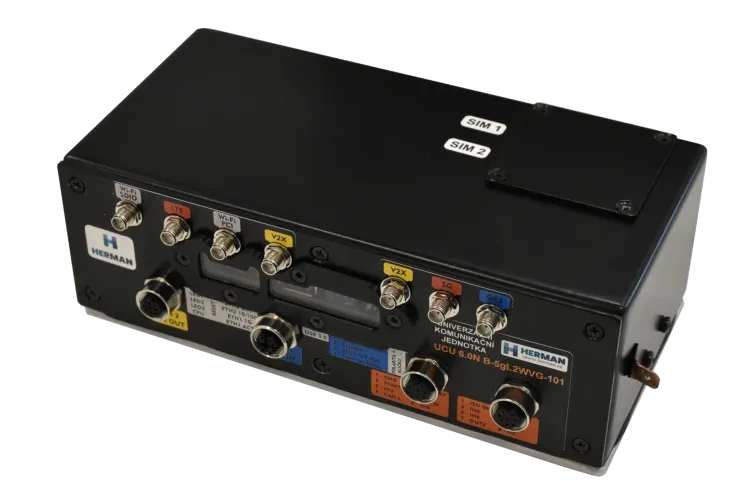
UCU 6.0N T (OBU) Compact roof-mounted unit with M12
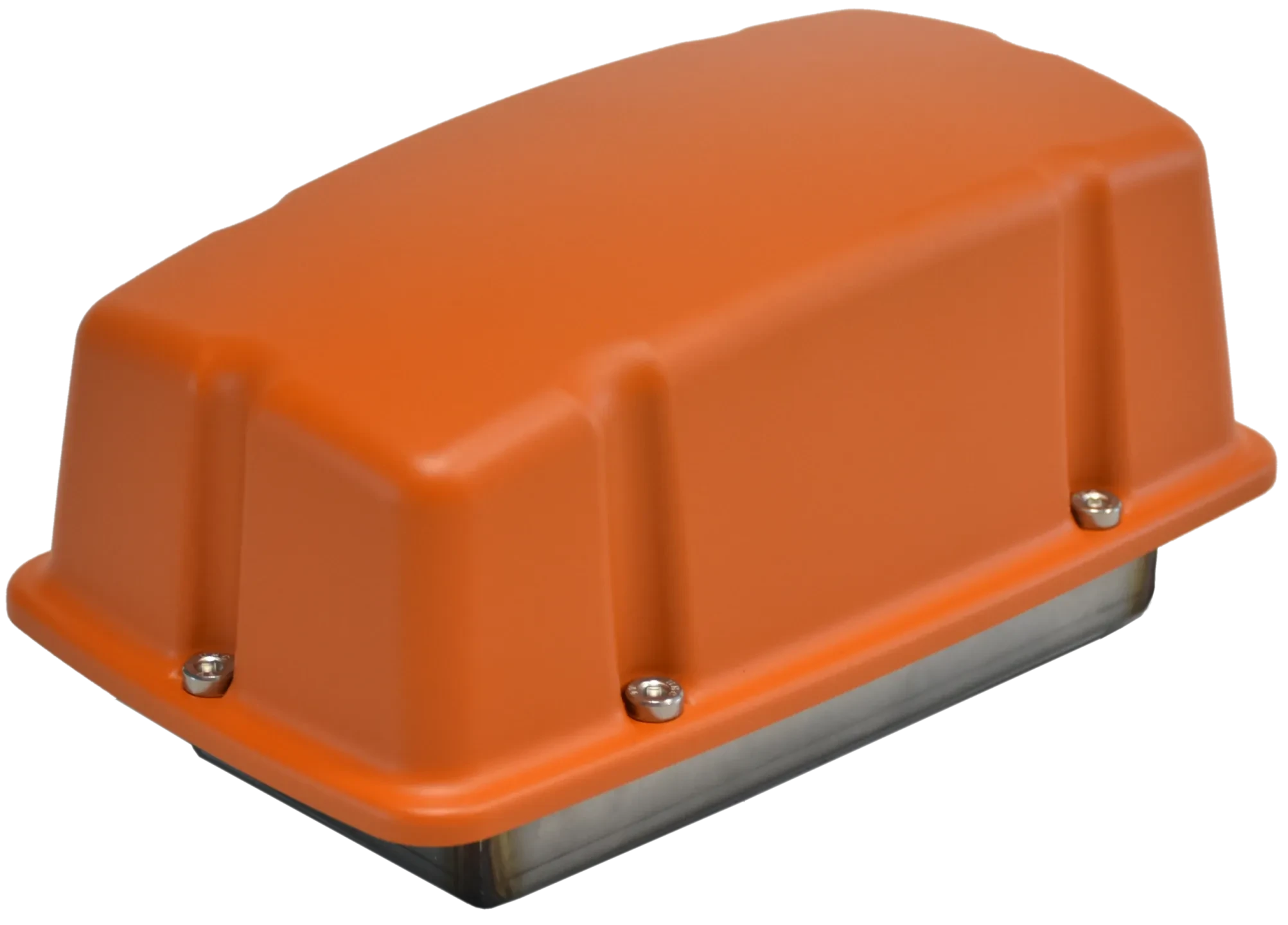
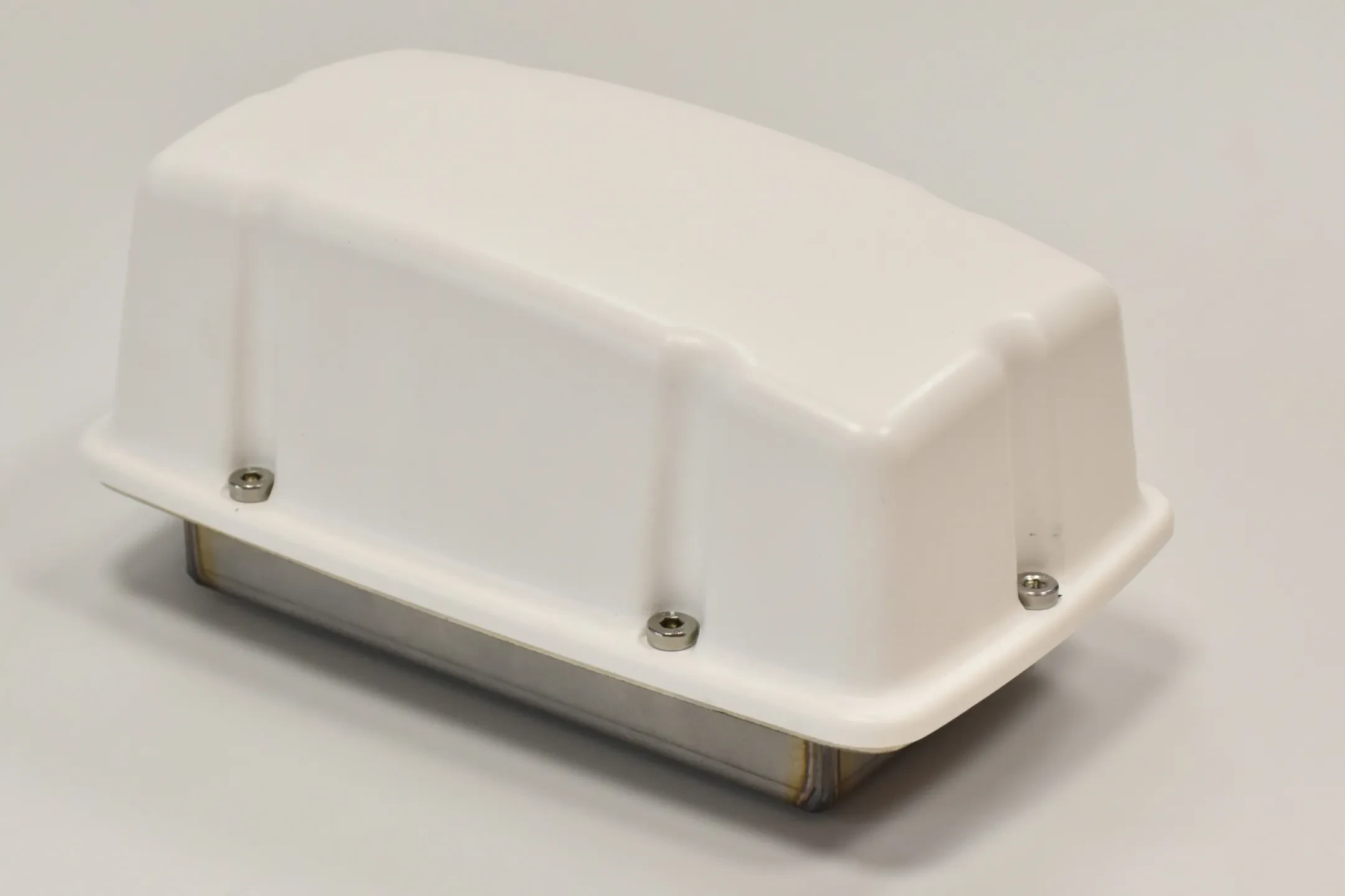
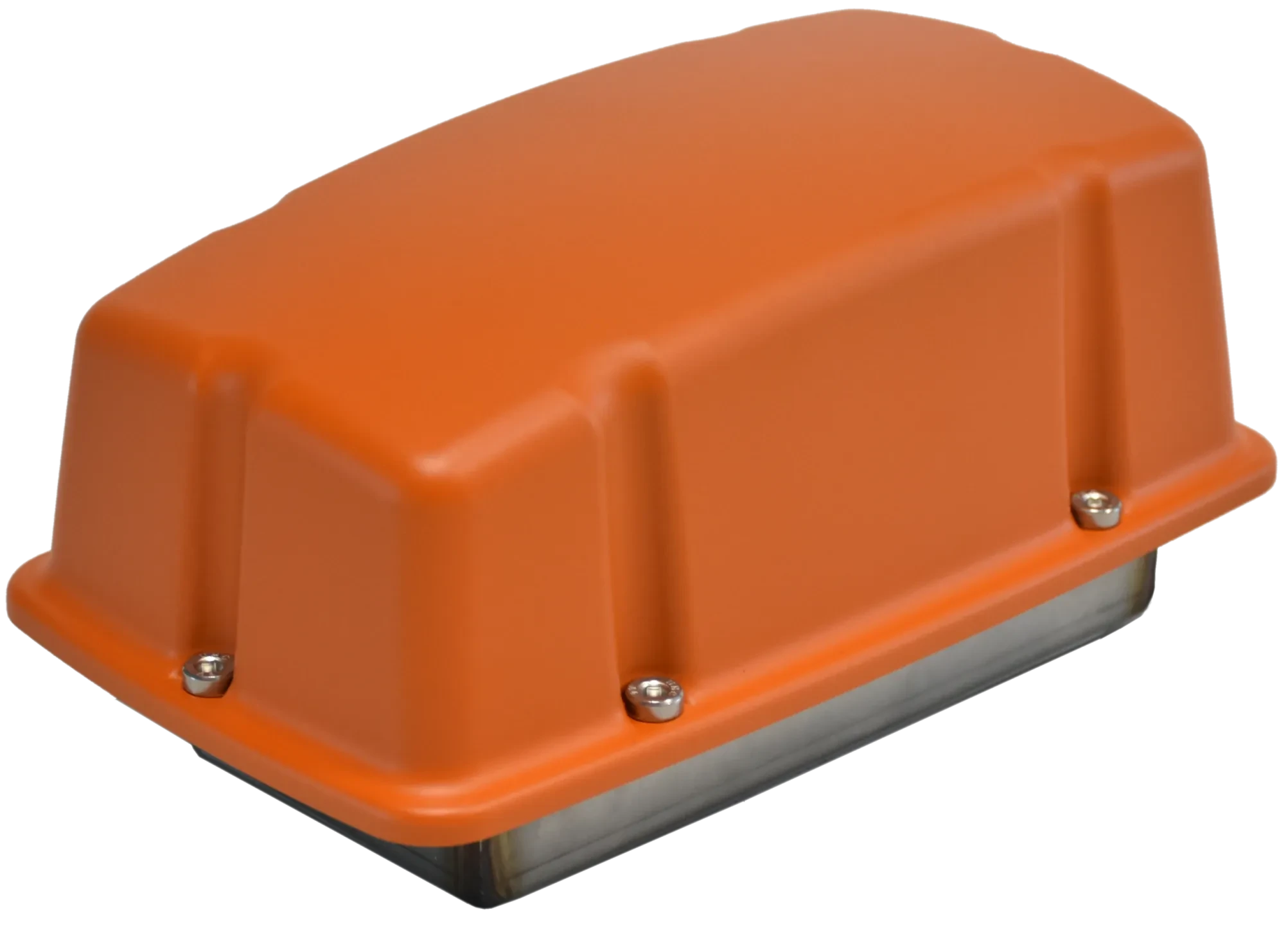
The UCU 6.0N T is a compact on-board unit (OBU) with V2X support, designed for mounting on the vehicle roof. All antennas (V2X, 4G/5G, GNSS and, optionally, Wi-Fi) are integrated into the housing, eliminating the need for coaxial cables to external antennas. Data connectivity is provided by a robust M12 X-code connector. The unit supports both V2X (ITS-G5) and C-V2X, complies with C-ROADS standards and is ready for PKI Level L1. It is designed for public transport vehicles, road maintenance vehicles and emergency services vehicles.
Contact us
The UCU 6.0N T is a new generation of universal on-board unit (OBU) for various types of vehicles, such as public transport vehicles, road maintenance vehicles and emergency service vehicles. It ensures safe communication between the vehicle and its surroundings, for example, giving priority passage to public transport and emergency service vehicles at junctions.
- All-in-one solution with integrated antennas
- European V2X (C2X) communication standard
- Support for both V2X and C-V2X
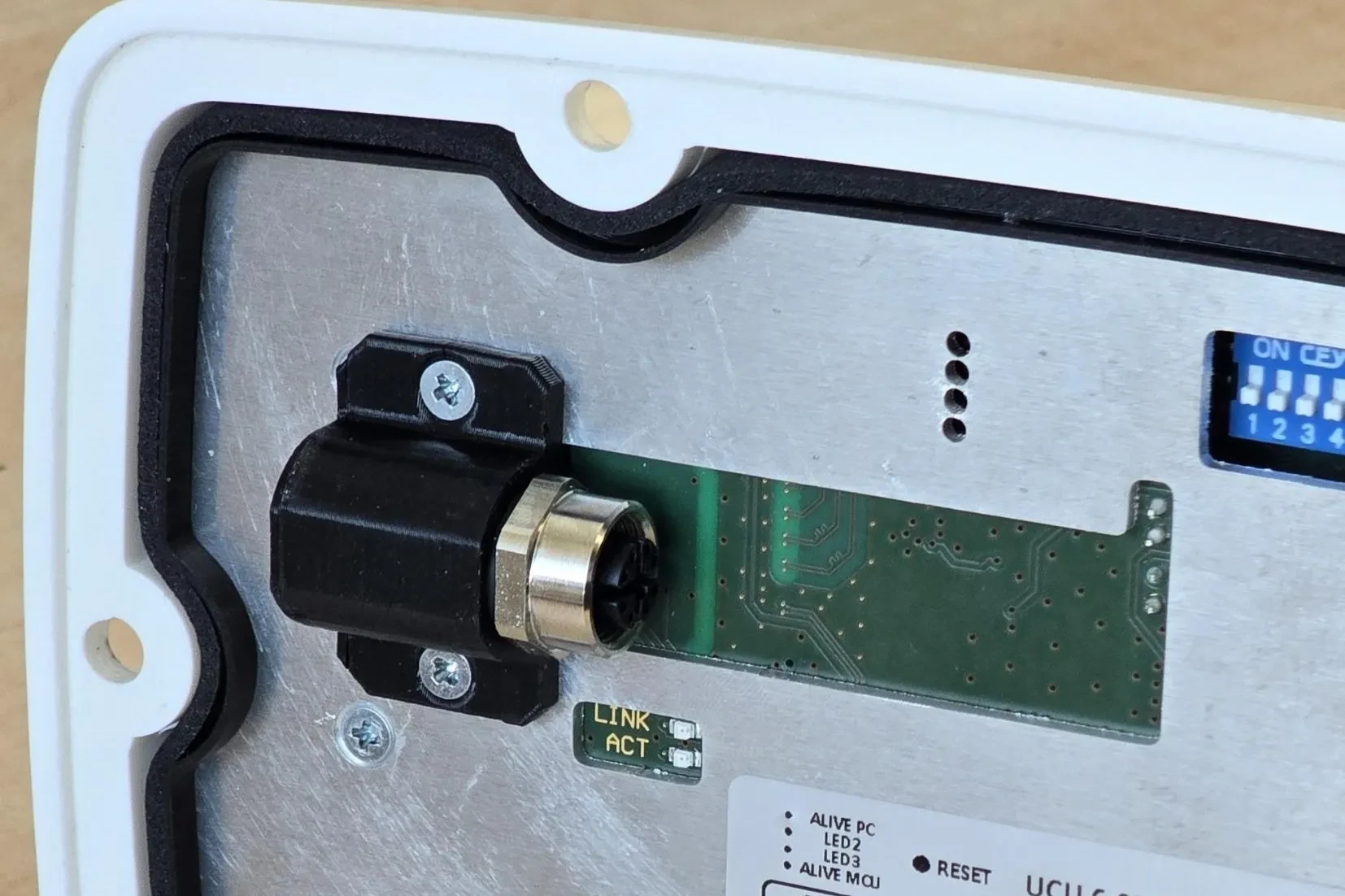
- M12 X-code connector
- 4G/5G modem
- GNSS module
- Remote monitoring and maintenance
- Connection to a tablet or dedicated display
- Secure unit – hardware and software ready for PKI L1
Standardised C2X/V2X interface
C2X/V2X communication (C2X = V2X) is a European standard that enables vehicles to communicate with one another and with elements of the transport infrastructure. The unit complies with the stringent C-ROADS standards for V2X technology, including the associated standards for security and certified signatures. As a result, it helps to improve transport safety and efficiency. It supports both V2X (ITS-G5, based on Wi-Fi) and C-V2X (based on the mobile network).
Priority for special vehicles
The on-board unit manages priority passage for public transport vehicles through junctions. It independently sends priority requests and processes responses from RSU units. It supports a range of protocols for communication with the on-board computer, such as IBIS-IP or ITxPT, as well as the new PTX interface, which enables information from C-ITS to be relayed to the driver. Emergency service vehicles request priority based on their route to the destination or, where applicable, based on internal navigation.
Remote management and monitoring
The unit is equipped with up to two 4G or 5G modems, which ensure a fast, low-latency connection to central systems. The units can be easily monitored and configured remotely using our ‘Anbos’ C-ITS back-office server. The unit includes a web application for configuration and management, as well as for immediately viewing the unit’s status. The unit supports secure communication within a PKI, which ensures trusted communication with other units, and is ready for PKI Level L1 in terms of both hardware and software.
Our proven technologies
The previous-generation OBU units (UCU 5.0) have been deployed in real-world operations for several years, particularly as part of internationally recognised projects in Brno and Hradec Králové. Building on this experience, the new generation UCU 6.0 takes the capabilities of OBU units to the next level. The unit features a new processor with significantly higher computing power and more RAM. In addition, it has very low power consumption in sleep mode and significantly improved tamper detection.
Information for drivers
The unit can be easily connected to several types of driver displays. One option is a tablet running our Android/iOS app; another is a dedicated display powered by the OBU. Both devices allow the driver to be informed of hazardous situations in the vicinity or of the recommended speed when approaching a junction. These displays also enable basic interaction with the unit.
Improved road safety
As well as displaying warnings and information to the driver, the OBU can automatically generate warning messages itself. For example, if fitted to an emergency service vehicle, it warns others of the approaching vehicle. On a vehicle carrying out roadworks, it alerts others to the work in progress. Public transport vehicles can warn drivers when they are stationary at a dangerous stop. The unit uses internal digital maps to generate these warnings.